Quick Answer: First 6 Weeks After Giving Birth
- The first six weeks after giving birth are primarily about healing, not “getting your body back.”
- Gentle movement, rest, hydration and gradual daily activity usually support recovery better than rushing into exercise.
- Avoid activities that create excessive strain or abdominal pressure before your body has had time to recover.
- Every recovery is different. If pain, heavy bleeding, worsening symptoms or concerns about your recovery develop, seek advice from your midwife, GP or healthcare professional.
Bringing a baby home changes almost everything overnight. Sleep becomes unpredictable, your daily routine disappears, and it’s easy to feel pressure. Whether from social media, friends or even yourself—to recover as quickly as possible.
The reality is much less dramatic. During the first six weeks after giving birth, your body is still healing from pregnancy and childbirth. Muscles, connective tissues and the pelvic floor are adapting, hormone levels continue to change, and your energy is often directed towards feeding, bonding with and caring for your baby.
Rather than focusing on how quickly you can return to your previous fitness level, use these first weeks to support your body’s natural recovery. This is important to avoid diastasis recti.
Why Are the First 6 Weeks After Giving Birth So Important?
The first six weeks lay the foundation for longer-term recovery because many of the body’s healing processes are still underway. Even if you begin to feel physically better, internal tissues, muscles, and connective structures often continue to repair well beyond the first few weeks.
Pregnancy stretches the abdominal wall, places sustained pressure on the pelvic floor and changes posture, breathing patterns and core stability. Whether you had a vaginal birth or a Caesarean birth, your body needs time to adapt.
That doesn’t mean complete bed rest is the goal.
Check Our Body Sculpting Program in , UK
Instead, recovery is usually about finding a balance between gentle movement and adequate rest while gradually increasing daily activities as you feel able.
What Should You Prioritise During the First 6 Weeks After Giving Birth?
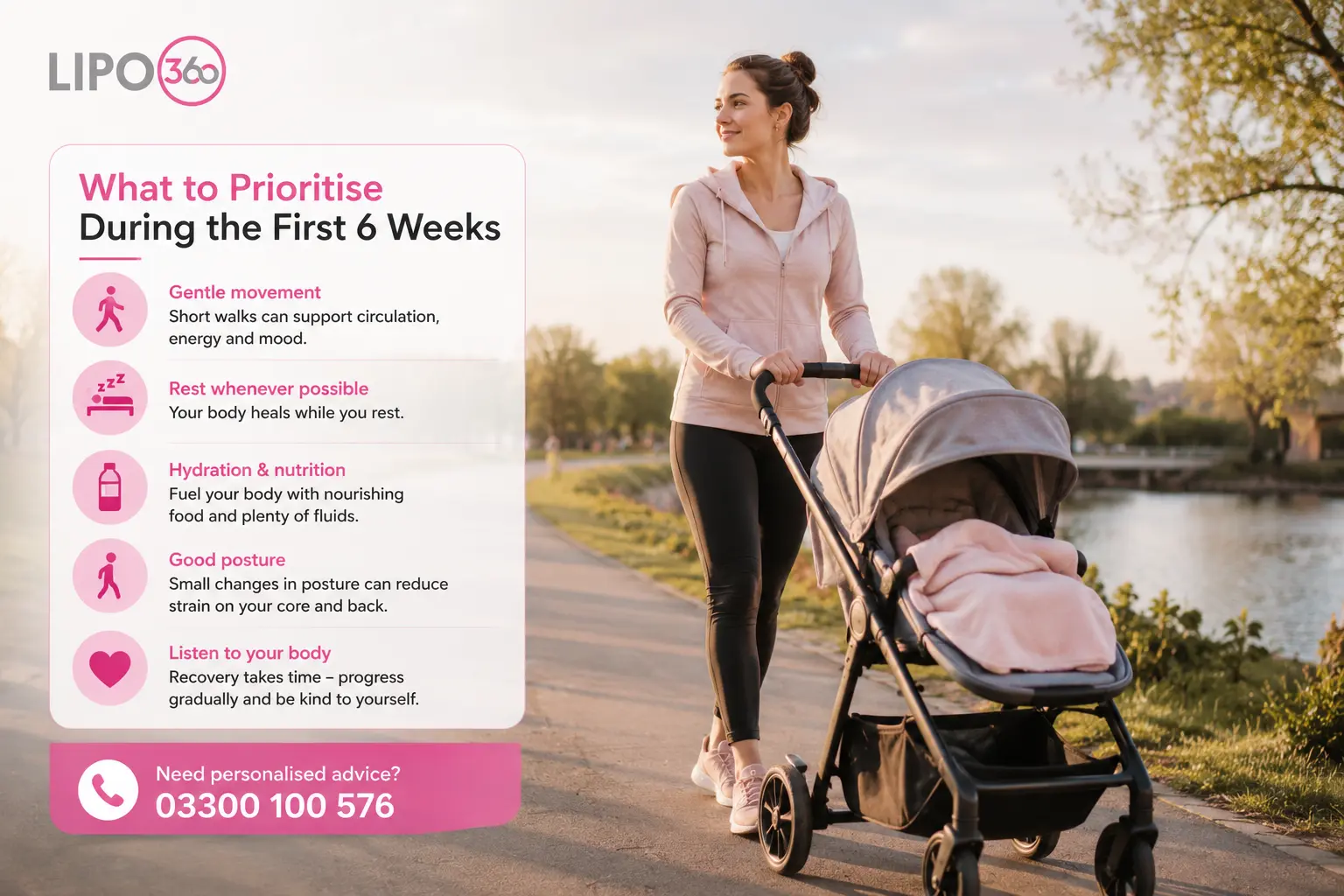
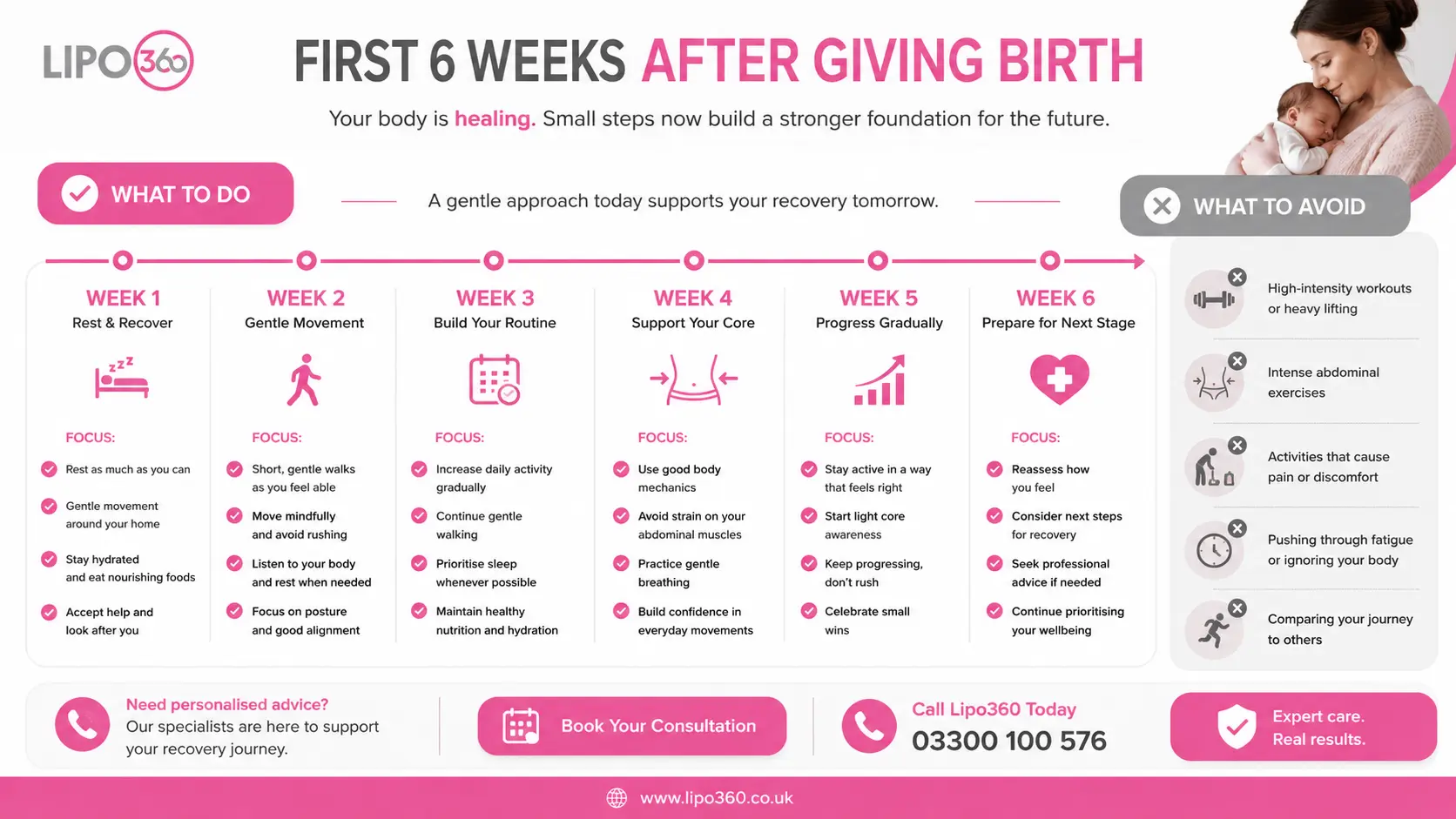
Instead of trying to do everything at once, focus on habits that support recovery little by little. Small, consistent choices often make more difference than attempting an intensive recovery programme.
Gentle movement
Short walks around your home or outside, when comfortable, may help improve circulation, reduce stiffness and support overall wellbeing. The goal isn’t fitness—it’s simply helping your body move naturally again.
Rest whenever possible
Sleep may be fragmented with a newborn. But rest still matters. Accepting help with household tasks or meals can allow your body more opportunity to recover.
Check Our Skin Tightening Treatment in , UK
Nutrition and hydration
Your body requires energy to heal. Eating balanced meals and drinking enough fluids support recovery, particularly if you’re breastfeeding.
Comfortable posture
Many new parents spend hours feeding, lifting and carrying their baby. Changing positions regularly, supporting your back with cushions and avoiding prolonged awkward postures may reduce unnecessary strain on your back and abdominal muscles.
Listen to your body
On the road to recovery from pregnancy or diastasis recti, few of us follow a perfect line. Doing too much feel knackered is common in the early days. It is often more sustainable to slowly scout back into action than to slam-dance your way straight back into previous routines.
What Should You Avoid During the First 6 Weeks After Giving Birth?
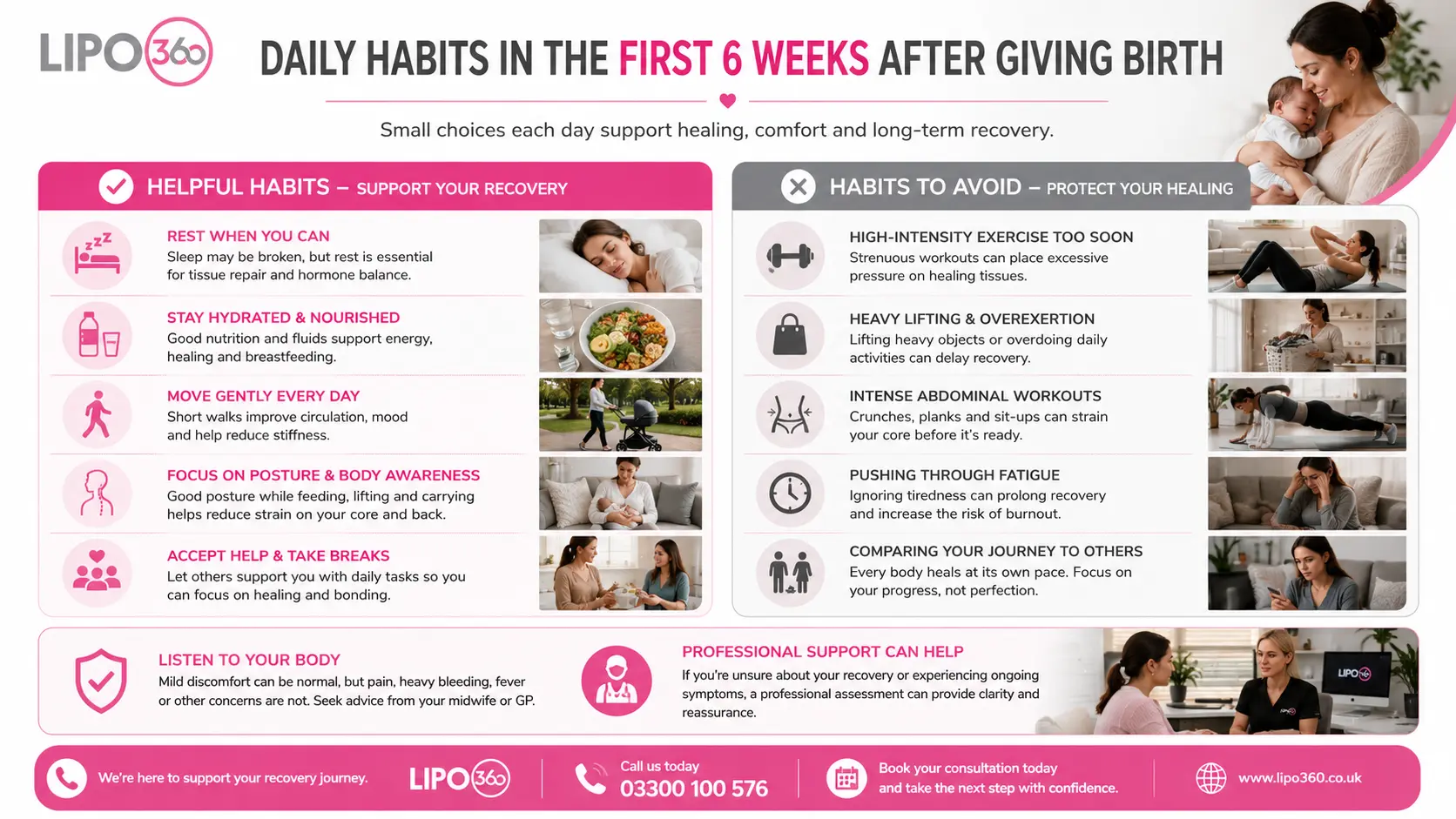
The first six weeks are generally not the time to test your physical limits. Activities that place excessive stress on healing tissues may leave you feeling more uncomfortable or prolong recovery.
Common examples for this case may include:
- Returning to high-impact exercise too soon.
- Heavy lifting beyond what feels comfortable.
- Intense abdominal workouts.
- Ignoring pain or persistent fatigue.
- Comparing your recovery with someone else’s.
Maybe the worst mistake is thinking that when you feel better, your body has healed itself entirely. Internal healing remains when the outside has gotten better.
Why Does Managing Abdominal Pressure Matter?
Everyday movements can place pressure on the abdominal wall. During early recovery, learning how you move can be just as important as how much you move.
Simple habits may help reduce unnecessary strain, including:
| Getting out of bed | Roll onto your side before sitting up. |
| Lifting your baby | Keep them close to your body rather than reaching forward. |
| Standing from a chair | Use your legs rather than pushing through your abdomen alone. |
| Carrying items | Avoid carrying several heavy bags at once where possible. |
| Coughing or sneezing | Supporting your abdomen with your hands or a pillow may feel more comfortable for some women. |
These aren’t strict rules. There are practical ways to move more comfortably while your body continues to heal.
Is It Normal to Still Look Pregnant?
Yes. Many women still have a rounded abdomen during the first few weeks after giving birth, and this is usually a normal part of recovery.
Several factors contribute, including:
- The uterus is gradually returning to its pre-pregnancy size.
- Abdominal muscles remain stretched.
- Swelling and fluid shifts.
- Changes in posture.
- Healing connective tissue.
Trying to flatten your stomach immediately after birth is neither realistic nor necessary. Recovery takes time, and every woman’s body follows its own timeline.
Should You Worry About Diastasis Recti During the First 6 Weeks After Giving Birth?
Some abdominal separation is common after pregnancy, and the first six weeks are generally considered a period of natural healing rather than one of intensive rehabilitation.
Instead of constantly checking the width of your abdominal muscles, focus on allowing your body to recover while paying attention to how you feel during everyday activities.
If you continue to notice abdominal weakness, doming, a persistent bulge or concerns about your recovery after the early postpartum period, a professional assessment can help determine whether further rehabilitation or treatment may be beneficial.
What If You Had a Caesarean Birth?
Recovery after a Caesarean birth follows the same overall principle—allowing tissues time to heal—but there are additional considerations because abdominal surgery is involved.
During the first few weeks, it is natural to be more tentative. Gentle walking is commonly recommended once you are ready, but activities that place a lot of stress on the abdominal wall should usually be progressed very slowly and according to your healthcare team’s advice.
Whether your baby was delivered vaginally or by Caesarean birth, recovery should be guided by how your body heals rather than by an arbitrary timeline.
When Should You Contact a Healthcare Professional?
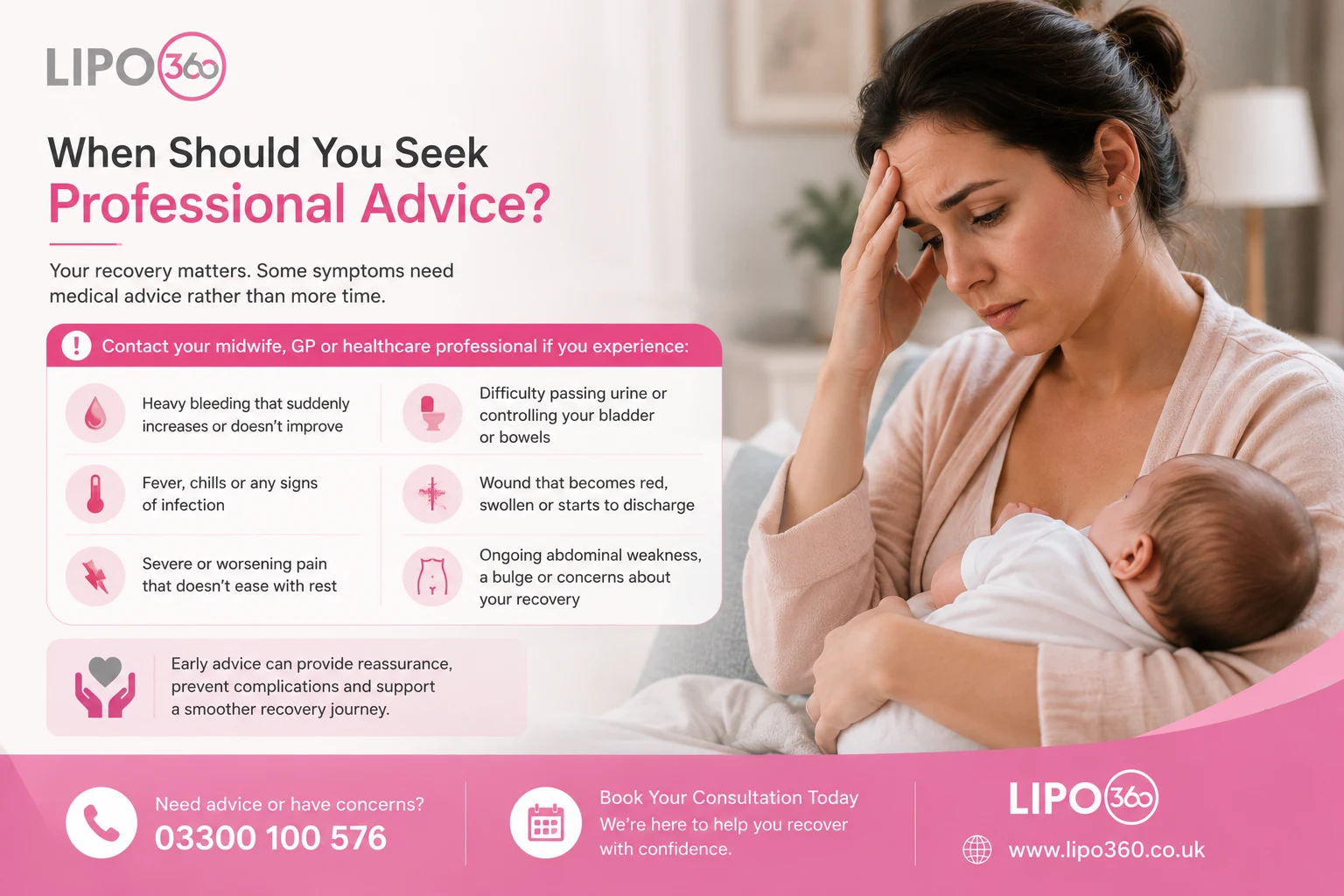
Many women improve steadily during the first few months following childbirth, but there are a number of signs and symptoms which should not be dismissed. Data Training: As far as recovery goes, it varies from person to person, but the presence of certain signs might indicate that you require medical evaluation rather than simply more time.
You should seek advice from your midwife, GP or healthcare professional if you experience:
- Heavy bleeding that suddenly increases after previously becoming lighter.
- A fever or signs of infection.
- Persistent or worsening pain that doesn’t improve with rest.
- Difficulties like passing urine or controlling your bladder or bowels.
- A wound that becomes increasingly red, swollen or starts discharging fluid.
- Ongoing abdominal weakness, a noticeable bulge or concerns that continue beyond the early recovery period.
Just because you get assessed early does not mean there is something terribly wrong. Oftentimes, it simply serves to put your mind at ease and help you determine the best next steps.
Common Mistakes That Can Slow Recovery
The biggest setbacks during the first six weeks often come from trying to return to normal too quickly. Recovery is rarely delayed by doing too little for a short period, but it can sometimes be affected by repeatedly pushing beyond what your body is ready for.
Some of the most common mistakes include:
Doing too much because you “feel fine”
Feeling more comfortable doesn’t always reflect what’s happening internally. Connective tissues, muscles, and surgical wounds continue to heal even when pain has improved.
Returning to structured exercise too early
The first six weeks are usually not the time to build muscle at the gym anyway; you’re better off focusing on re-establishing a proper baseline.
Ignoring posture throughout the day
Hours spent feeding, lifting, carrying and settling your baby can place repeated strain on your neck, shoulders, back and abdominal wall. Small adjustments throughout the day often make a noticeable difference.
Trying to “bounce back”
Social media often creates unrealistic expectations about postpartum recovery. Comparing yourself with someone else’s highlights, genetics or circumstances rarely helps. Your recovery should follow your body’s progress—not someone else’s timeline.
How Lipo360 Can Support Your Recovery Journey
For many women, the first six weeks are simply the beginning of recovery. As your body continues to heal, you may find that your strength gradually returns with time, gentle movement and appropriate rehabilitation.
However, some women continue to experience abdominal weakness, a persistent abdominal bulge or concerns that don’t improve as expected. If these symptoms continue beyond the normal early recovery period, a professional assessment can help identify what’s contributing to them and whether further support may be appropriate.
At Lipo360 , recovery is approached as an individual journey rather than a one-size-fits-all process. Where appropriate, the team can assess your abdominal wall, discuss your symptoms and explain the treatment options available if conservative recovery alone has not achieved the outcome you were hoping for.
The goal isn’t simply improving appearance. Restoring confidence, comfort and abdominal function is equally important when considering the most appropriate next step.
Key Takeaway
The first six weeks after giving birth aren’t about returning to your previous routine as quickly as possible—they’re about giving your body the time and support it needs to recover.
Gentle movement, adequate rest, good nutrition and realistic expectations usually provide a stronger foundation than rushing back into exercise or placing unnecessary pressure on healing tissues.
Every recovery follows its own pace. If you feel uncertain about your progress or continue to experience symptoms beyond the early postpartum period, seeking professional advice can provide reassurance and help you plan the next stage of your recovery from diastasis recti with confidence.
Frequently Asked Questions: First 6 Weeks After Giving Birth and Precautions
Is it normal to still feel sore six weeks after giving birth?
Yes, many women are still recovering at six weeks, particularly after a difficult vaginal birth or a Caesarean birth. Mild discomfort can be part of the healing process, but pain that becomes more severe, doesn’t improve or interferes with everyday activities should be discussed with a healthcare professional.
Can I vacuum or do housework during the first six weeks?
Light household tasks are often manageable if they feel comfortable, but there is no advantage in rushing back to a full routine. If an activity increases pain, leaves you exhausted or causes heavier bleeding afterwards, it’s usually sensible to scale back and give your body more time.
Is climbing stairs harmful after giving birth?
Most women can use stairs carefully if they feel steady and comfortable. After a Caesarean birth or if you’re experiencing pain or dizziness, taking stairs slowly and limiting unnecessary trips may make recovery more comfortable during the early weeks.
Should I try to lose weight during the first six weeks postpartum?
The first six weeks are generally better viewed as a healing period rather than a weight-loss programme. Eating well, staying hydrated and allowing your body to recover are often more beneficial than trying to follow a restrictive diet immediately after birth.
Can I sleep on my stomach? Is it safe after giving birth?
Many women can sleep in whichever position feels comfortable once they’re physically able to. However, comfort may depend on factors such as tenderness, breastfeeding, or recovery from a Caesarean birth. There isn’t one sleeping position that’s right for everyone.
Is it safe to carry my baby in a sling during the first six weeks?
For many parents, a properly fitted baby carrier can be a practical way to keep their baby close while keeping their hands free. It’s important to follow the manufacturer’s safety guidance and choose a carrier that supports both your comfort and your baby’s position.
When should I start checking for diastasis recti?
The first few weeks after birth are still part of the body’s natural healing process, so repeatedly checking the gap between your abdominal muscles is rarely helpful. If abdominal weakness or a persistent bulge continues after the early postpartum period, a professional assessment can provide more meaningful guidance.
Is it normal to feel emotional during the first six weeks?
Yes. Hormonal changes, interrupted sleep, physical recovery, and the adjustment to a new routine, such as caring for a newborn, can all affect how you feel. If low mood, anxiety or overwhelming emotions become persistent or start affecting your daily life, speaking with your GP, midwife, a clinical professional or health visitor is important.
Can I begin pelvic floor exercises straight after giving birth?
Many women are encouraged to begin gentle pelvic floor exercises soon after birth if they feel comfortable and their healthcare professional has not advised otherwise. If you’re unsure where to start or have ongoing symptoms, seeking advice from a women’s health physiotherapist can be helpful.
How do I know if my recovery is progressing normally?
Recovery isn’t measured by a single milestone. Gradually becoming more comfortable with everyday activities, seeing bleeding reduce over time and noticing your energy slowly improve are all encouraging signs. If your symptoms suddenly worsen, new problems develop, or you’re worried about your recovery, arranging a professional assessment is the safest approach.